
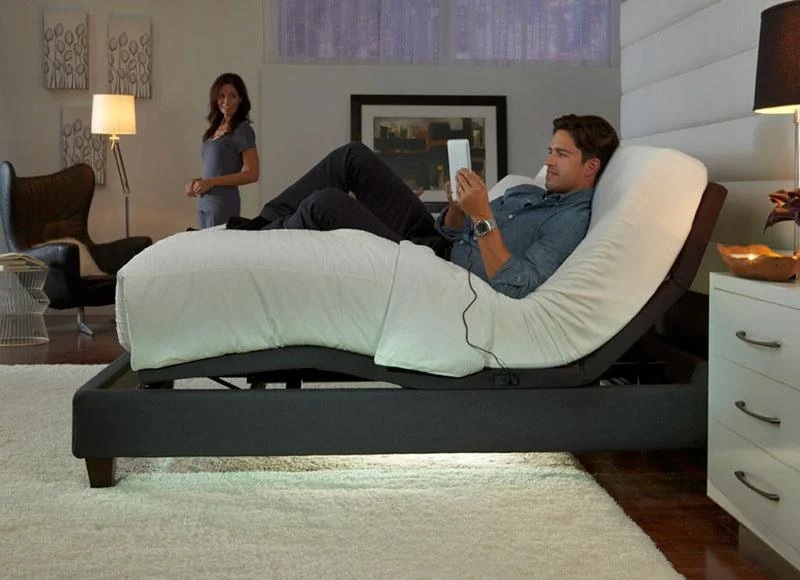
There’s a moment that most adjustable bed shoppers describe in strikingly similar terms: the realization that they’ve been sleeping poorly for years, assuming it was just how sleep felt, only to discover that the problem was largely positional. A few nights on an adjustable base — head slightly elevated, legs gently raised — and suddenly they’re sleeping through, waking without stiffness, and wondering why they didn’t make the change sooner.
If you’re at the research stage of that journey, this guide is designed to give you a clear, practical picture of what adjustable bed packages involve, what questions to ask before buying, and how to match a package to your specific situation. The adjustable bed market has matured considerably over the past decade, and there are now excellent options at a range of price points — but the differences between them matter, and it pays to understand what you’re actually comparing.
What Does an Adjustable Bed Package Include?
An adjustable bed package bundles two components that need to work together: the adjustable base and the mattress. Buying them as a paired package rather than sourcing them separately offers three main advantages.
Compatibility is guaranteed. Not all mattresses work on adjustable bases. A package removes any uncertainty — the mattress has been specifically selected or designed to flex with the base’s range of motion without being damaged over time.
Better value. Package pricing is almost always more favourable than purchasing each component individually. The saving varies, but it’s typically meaningful enough to make the package the smarter financial choice when you need both components.
Simplified decision-making. The adjustable bed market can be overwhelming to navigate. A well-curated adjustable bed package presents a vetted combination rather than leaving you to cross-reference specifications across separate product categories.
For most buyers who are setting up a new bedroom or replacing an ageing setup, a package is the natural starting point.
The Core Components: What to Evaluate
The Adjustable Base
The base is the mechanical heart of the system, and it’s where quality differences are most consequential. When evaluating bases, pay attention to:
Motor quality and noise. A good motor operates quietly — you should be able to adjust position without waking a partner in the same room. Cheaper motors can be noticeably loud and are more prone to failure over time. Look for bases with motors that carry a meaningful warranty, ideally five years or more.
Range of articulation. Most bases adjust both the head and foot sections independently. The range of elevation — typically 0 to 60–70 degrees at the head, 0 to 45 degrees at the foot — determines how many useful positions the base can achieve. A greater range gives you more flexibility, though most people end up using a fairly narrow band of their base’s total range on a regular basis.
Weight capacity. Adjustable bases are built to handle significant load, but it’s worth confirming that the rated capacity comfortably accommodates both sleepers plus the mattress weight. Most quality bases are rated to 230 kg or above.
Remote and control options. Wireless remotes are standard on modern bases. Many now offer app control via Bluetooth or Wi-Fi, programmable memory positions, and sleep tracking integration. These features are genuinely useful for some people and irrelevant to others — be honest with yourself about what you’ll actually use.
Under-bed clearance. Adjustable bases sit higher off the ground than flat bases, which is relevant if you store items under the bed or use a bed frame with a specific aesthetic. Confirm the height before purchasing if this matters to your setup.
The Mattress
The mattress in an adjustable package needs to satisfy two requirements simultaneously: it must flex with the base without structural damage, and it must provide the right feel and support for the way you sleep.
Construction type. Pocket spring mattresses — where each spring moves independently — handle adjustable base articulation well. So do mattresses built primarily from memory foam or latex. What doesn’t work is a traditional bonnell coil system where springs are connected: repeated bending stresses the connections and shortens the mattress’s lifespan significantly.
Firmness. Medium to medium-firm tends to be the sweet spot for adjustable bases. A very soft mattress can feel unsupportive when the base is elevated — particularly at the head — while a very firm mattress may not flex as naturally with the base’s movement. That said, personal preference matters, and trial periods are worth taking advantage of if they’re offered.
Thickness. Most adjustable bases pair best with mattresses in the 25–35 cm range. Thinner than this and comfort is compromised; thicker than this and the base may not achieve its full range of articulation.
Edge support. This is often underrated. A mattress with strong edge support is significantly more comfortable to sit on the side of the bed, makes it easier to get in and out (important for people with mobility limitations), and reduces the feeling that you might roll off when sleeping near the edge.
Split Configurations: When Two Is Better Than One
For couples, one of the most valuable — and least discussed — features of adjustable bed packages is the split configuration. Rather than a single base spanning the full bed width, a split setup places two independent bases side by side, each with its own motor, remote, and adjustment range.
This matters enormously in practice. If you prefer sleeping with your head elevated for reflux management but your partner sleeps flat, a split base means neither person has to compromise. If one of you wakes at 5am and wants to read in bed without disturbing the other, you can raise your head independently. If one partner has had a knee procedure and needs to elevate their legs overnight, they can do so without affecting the other side.
The practical arrangement for a split queen or split king involves a mattress on each base — either two separate mattresses, or a mattress designed specifically for split configurations that spans both bases while maintaining flexibility at the join.
It’s worth noting that split configurations do require slightly more thought around bedding. Standard fitted sheets won’t work on two separate bases; you’ll either use two sets of twin sheets or invest in a split-compatible fitted sheet designed for exactly this setup.
Health Considerations That Drive the Purchase
Understanding why people buy adjustable beds helps clarify whether the investment is right for your situation. The most common health-related motivations include:
Chronic lower back pain. The lumbar spine is rarely happy lying completely flat for 7–9 hours. A slight elevation at both the head and foot — creating a gentle “zero gravity” position inspired by NASA research on pressure distribution — takes significant load off the lumbar vertebrae and surrounding musculature.
Acid reflux and GERD. Elevating the head of the bed between 15 and 20 degrees is one of the most consistently recommended lifestyle interventions for nighttime reflux. Unlike stacking pillows, an adjustable base maintains a consistent angle throughout the night rather than collapsing as you shift position.
Peripheral oedema and circulation issues. Elevating the legs above heart level encourages venous return and reduces overnight swelling in the feet and ankles. This is particularly relevant for people who spend long hours on their feet during the day.
Sleep apnoea and snoring. Positional snoring — snoring that worsens when sleeping completely flat — often responds well to head elevation. For people with mild to moderate obstructive sleep apnoea, elevating the head is sometimes recommended as a positional therapy alongside or in addition to other interventions.
Post-surgical recovery. Following joint replacements, spinal surgery, or abdominal procedures, specific positioning recommendations are common. An adjustable base makes it practical to maintain these positions throughout the night without relying on pillows that shift during sleep.
Price Points and What to Expect at Each Level
The adjustable bed market spans a significant price range, and it’s worth understanding what you’re actually getting at different levels.
Entry level. Basic head and foot adjustment, a functional but no-frills remote, and a compatible foam or spring mattress. Suitable for buyers who primarily want the health benefits of positional adjustment without additional features. Motor quality at this price point can vary — look for warranty length as a proxy.
Mid range. Quieter motors, wireless remotes with memory positions, USB charging ports, and a more substantial mattress. This is where most buyers find the best balance of features and value.
Premium. App control, sleep tracking integration, under-bed lighting, massage functions, split configurations witha dual-zone control, and high-specification mattresses with advanced comfort layers. These packages are genuinely impressive but come with a price tag that’s only justified if you’ll actually use the additional features.
For most buyers, the mid-range bracket represents the best value. The core functionality — quiet adjustment, reliable motor, compatible quality mattress — is present, without paying for features that may rarely be used.
Practical Questions to Ask Before Buying
Before committing to any adjustable bed package, it’s worth working through a few practical questions:
- What is the total weight capacity, and does it comfortably accommodate your situation?
- What warranty covers the motor, the base frame, and the mattress separately?
- Is there a trial period or return policy if the setup doesn’t suit you?
- What are the delivery and installation arrangements? Adjustable bases are heavy — white-glove delivery and setup is worth paying for.
- What bed frames are compatible with the base, if you want to use an existing or new frame?
- How does the remote work, and is there an app option if the primary remote is lost or fails?
Adjustable bed packages represent one of the more considered purchases you can make for your bedroom. Unlike a mattress upgrade that simply changes the feel of sleeping flat, an adjustable setup fundamentally changes what’s possible — how you position yourself, how you manage health conditions during sleep, and how independently you and a partner can customise your respective experiences.
The best approach is to start with your specific sleep problems and work backwards from there. What is currently disrupting your sleep or making you uncomfortable? Which positions or angles tend to help? From there, the right package — base features, mattress construction, size, and configuration — becomes much easier to identify. Done well, it’s the kind of purchase that meaningfully improves how you feel every single morning.

