
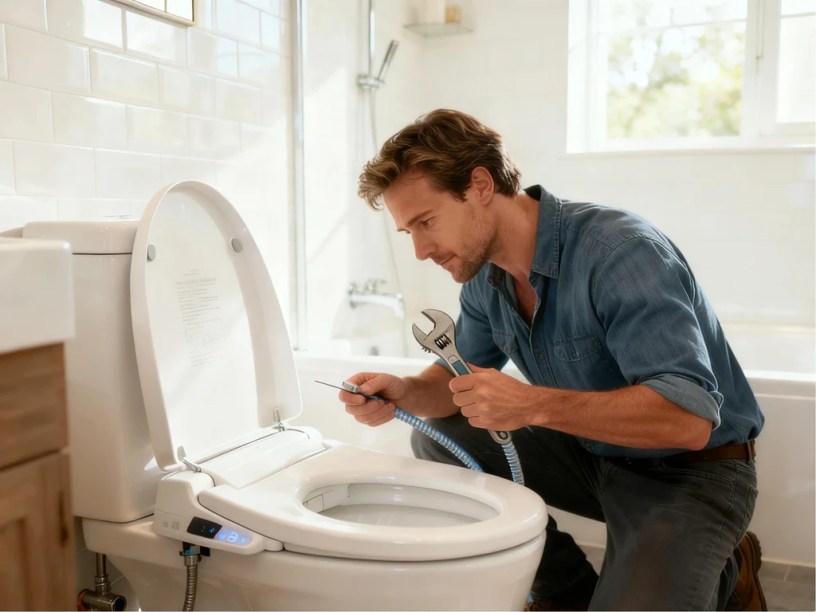
A bidet seat or washlet toilet that’s stopped working properly is one of those household problems that gets put off longer than it should be. It’s not urgent in the way a burst pipe is, but living with a malfunctioning unit — weak spray, error codes flashing, or a heated seat that’s stopped heating — gets old fast. Before calling anyone out, it helps to understand what actually drives bidet repair cost up or down, so you’re not caught off guard by a quote or, worse, paying for a repair that a five-minute fix could have solved.
The Most Common Faults, Ranked by How Often They Actually Happen
Not every fault is created equal, and the good news is that the most frequent issues tend to be the cheapest to resolve.
Weak or inconsistent water pressure is the single most common complaint, and it’s often not a fault with the unit at all — inline filters clog with mineral sediment over time, particularly in areas with harder water, and a simple filter clean or replacement restores full function.
Error codes on electronic models usually point to something minor: a sensor misread, a water temperature fluctuation, or a momentary power interruption. These are frequently resolved with a reset rather than a parts replacement, though persistent codes can indicate a genuine internal fault worth having checked.
Heating element failures are more involved, since they typically require opening the unit and replacing an internal component — this sits at the higher end of repair costs simply due to the labour and parts involved.
Leaking connections at the water supply line are usually a quick fix — a worn washer or a loose fitting — and one of the more affordable repairs available, provided it’s caught before it causes water damage to surrounding flooring or cabinetry.
What Actually Moves the Price Needle
Several factors combine to determine where a specific repair lands on the cost spectrum:
- Age of the unit — older models sometimes use discontinued parts, which can mean a longer sourcing process or a higher parts cost than a current-model equivalent
- Brand and model complexity — premium units with more electronic features naturally have more components that can require diagnosis and replacement
- Whether it’s a callout-only fix or requires return visits — some faults are diagnosed and fixed in a single visit; others require ordering a specific part after an initial assessment
- Warranty status — a unit still under manufacturer warranty may have parts covered even if labour isn’t, which meaningfully changes the out-of-pocket cost
- Access and installation complexity — a unit installed in a tight ensuite with limited clearance takes longer to service than one with generous access space
DIY Fixes Worth Trying Before You Book a Callout
Not every issue needs a tradesperson. A few things are worth checking yourself first, provided you’re comfortable doing so safely:
- Check that the isolation valve is fully open — a partially closed valve is a surprisingly common cause of weak pressure
- Inspect and clean any accessible inline filter, following the manufacturer’s guide
- Try a full power cycle (switching off at the wall, waiting a minute, switching back on) for electronic units throwing error codes
- Check the water supply hose for visible kinks or damage
- Confirm the unit is receiving power at all — a tripped safety switch is an easy oversight
If none of these resolve the issue, that’s the point where calling in a professional makes sense, since anything beyond this typically involves opening the unit or working with the water and electrical connections directly.
When a Repair Isn’t Worth It
There’s a point at which repairing an older unit stops making financial sense compared to replacement, particularly if:
- The unit is more than 8–10 years old and parts are becoming difficult to source
- Multiple components have failed in succession, suggesting broader wear rather than an isolated fault
- The repair quote approaches a significant percentage of what a new equivalent unit would cost
- The model has been discontinued and spare parts are no longer manufactured
A good tradesperson will tell you honestly if a repair isn’t the sensible option rather than patching an ageing unit repeatedly. If you’re at this decision point, it’s worth comparing the full repair service breakdown against replacement costs before committing either way — sometimes the numbers make the decision for you.
Getting an Accurate Quote Rather Than a Guess
The most reliable way to avoid quote surprises is to describe the fault as precisely as possible when you first call. “It’s not working” gives a tradesperson almost nothing to work with. “The water pressure has dropped noticeably over the past two weeks and there’s an intermittent error code on the display” gives them enough to narrow down likely causes before they even arrive, which often means a more accurate initial quote and fewer surprises on the day.
It’s also reasonable to ask upfront whether the quote is a flat callout-and-diagnosis fee, or whether parts and labour beyond diagnosis are included. Reputable tradespeople are generally upfront about this distinction; vague answers here are worth treating as a small red flag.
Preventative Habits That Reduce Repair Frequency
A meaningful chunk of repair callouts are preventable with basic ongoing maintenance:
- Clean or replace inline filters every 3–6 months, particularly in hard water areas
- Wipe down the nozzle housing monthly to prevent mineral scale build-up
- Avoid harsh chemical cleaners directly on electronic components or seals
- Have the unit’s connections briefly inspected during any general home plumbing service
None of this eliminates the possibility of a fault entirely, but it does meaningfully reduce how often you’ll need to think about repair costs in the first place.
The Bottom Line
Repair costs for bidet seats and washlet toilets sit on a genuinely wide spectrum, and the biggest single factor is simply what’s actually wrong — a clogged filter and a failed heating element are entirely different jobs with entirely different price tags. Before assuming the worst, try the basic checks that don’t require any tools beyond your own hands, and when you do call a professional, give them a precise description of the symptoms. It’s the fastest way to get an accurate quote and avoid paying for more than the job actually requires.

